
Why Dachshunds Get Cold Easily: What Owners Should Know
Choose a dachshund coat that fits your dog’s long back and deep chest comfortably, providing warmth without restricting movement or flexibility.
Learn how to help reluctant dogs accept toothbrushing with gentle, step-by-step techniques, practical dental-care tools, and positive reinforcement.
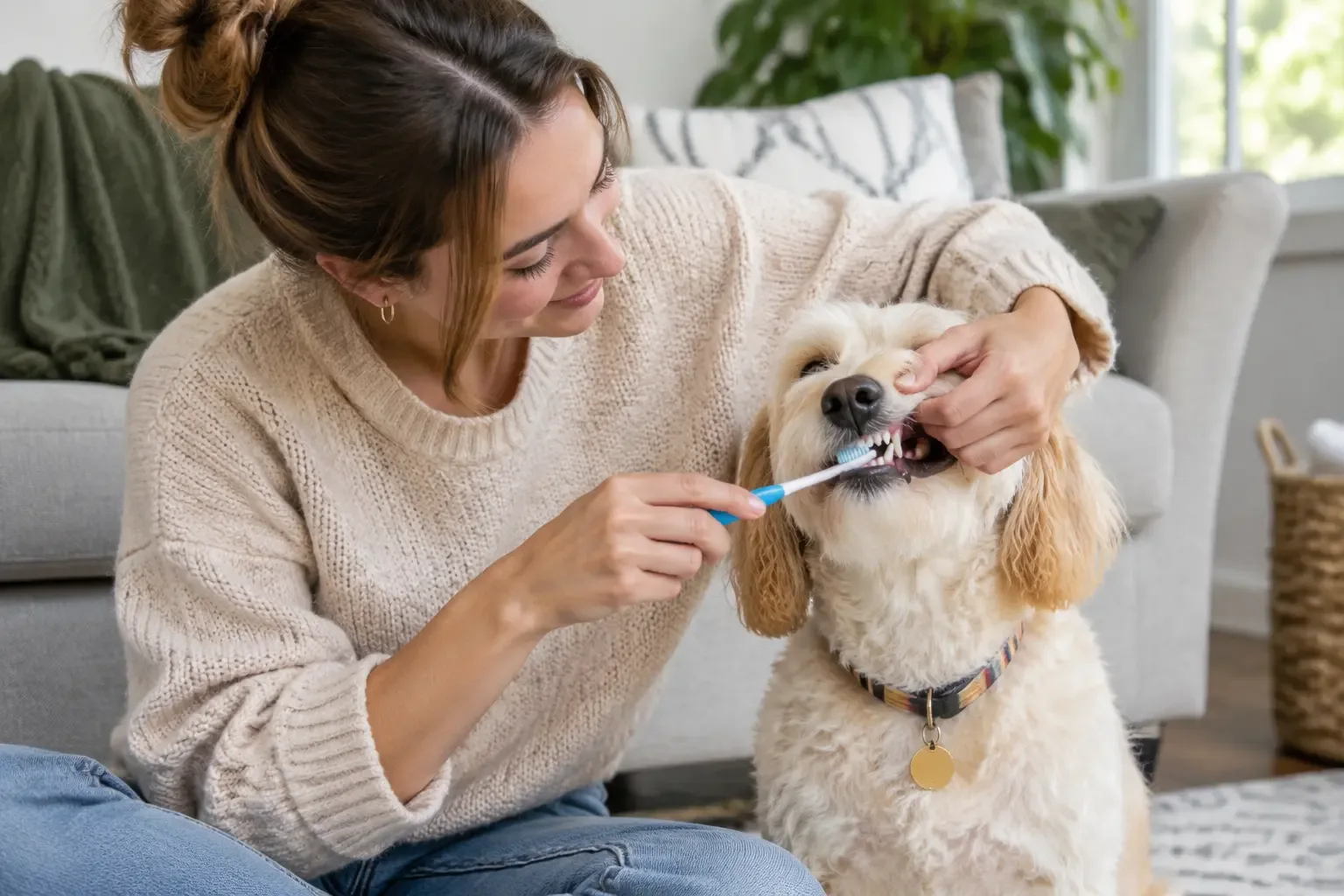
A practical, step-by-step guide to building a calmer dental-care routine.
For some dogs, a toothbrush is no big deal. For others, the moment it appears, they turn away, back up, or clamp their mouths shut. If this sounds familiar, you are not alone. Toothbrushing can feel unfamiliar, uncomfortable, or simply confusing to a dog that has not learned what to expect.
The answer is rarely to hold your dog still and brush faster. A better approach is to make each step predictable, keep sessions short, and reward your dog for staying relaxed. With patience, many dogs can become more comfortable with routine mouth care.
Plaque is a soft film that builds up on teeth. Regular brushing helps remove plaque before it hardens. Tartar, also called calculus, is hardened buildup that cannot simply be brushed away at home. If you notice thick deposits, inflamed gums, or signs of pain, ask your veterinarian to examine your dog rather than trying to scrape the teeth yourself.
Daily brushing is the ideal goal, but a routine your dog can tolerate is a better starting point than an occasional stressful attempt. The Veterinary Oral Health Council (VOHC) notes that regular brushing is worthwhile even when a dog cannot tolerate a complete brushing routine. The cheek-facing surfaces of the upper teeth deserve particular attention because plaque and tartar can accumulate there quickly.
Choose a quiet moment when your dog is relaxed. Briefly touch the side of the muzzle, then reward calm behavior with praise or a small treat. When your dog is comfortable with that, gently lift the lip for just a second and reward again.
Keep the first sessions short. Do not pin your dog down or force the jaws open.
Let your dog sniff and taste a small amount of toothpaste made specifically for pets. This helps make the new routine more familiar before a toothbrush is involved.
Never use human toothpaste: dogs may swallow it, and some ingredients are unsuitable or unsafe for pets.
Choose a soft-bristled toothbrush sized for your dog. Allow your dog to sniff it and reward curiosity. You can touch the brush gently to the outside of the muzzle before trying to brush.
If your dog turns away, stiffens, or tries to leave, pause and return to an easier step next time.
When your dog is relaxed, gently lift the lip and use light strokes on the outer surfaces of one or two accessible teeth. Focus near the gumline without pressing hard.
You do not need to complete the whole mouth in one session. Gradually add more teeth as your dog becomes comfortable.
End while your dog is still calm, offer praise, and put the supplies away. Repeat the routine regularly, adding a little time only when your dog is ready.
If your dog becomes tense or distressed, make the next session shorter or return to an earlier step. Progress may take days or weeks, and that is normal.
A soft toothbrush and pet-specific toothpaste are the foundation of a home brushing routine for dogs that will accept them. Dental finger wipes may be easier for some owners to introduce during early handling practice, although they may not clean as thoroughly as brushing.
For dogs that are comfortable with an added aid, a supervised brushing-assistance accessory may make it easier for an owner to reach the teeth.
VTIISAMAO Dog Dental Chew & Cleaning Assistant with Adjustable Safety Cord (2-Pack) is designed to be used with a toothbrush or other dental tool and includes two sizes with an adjustable cord.
Introduce it gradually, check that the fit is comfortable, and supervise every session. It may not suit every dog and should never be used to force a dog to accept mouth handling.
Any accessory is optional: the priority is a calm, positive routine that respects your dog's comfort. Stop if your dog struggles, shows distress, or seems painful, and ask your veterinarian for guidance on a suitable approach.
Illustrative guide: Introduce the optional brushing helper gradually and use only with a willing, supervised dog.
Toothbrushing should not be painful. Stop and seek veterinary advice if your dog:
These signs may indicate dental disease or another problem that needs professional assessment.
A veterinarian should also assess visible heavy tartar. Professional dental cleaning and treatment may be needed for disease below the gumline—areas that cannot be properly evaluated or treated through home brushing alone.
Regular home care supports oral health between veterinary visits; it does not replace dental examinations or professional treatment.
Daily brushing is the ideal goal. If your dog is new to brushing, begin with brief sessions and build toward a routine. Even regular partial brushing is a more useful starting point than forcing a full session your dog cannot tolerate.
Usually not. Many outer tooth surfaces can be reached by gently lifting the lips while the mouth stays closed. Ask your veterinary team to demonstrate a safe technique for your dog's mouth.
Brushing helps remove soft plaque; it does not remove established hardened tartar. Do not scrape deposits at home. Your veterinarian can recommend the right next step.
Do not turn brushing into a struggle. Return to gentle handling practice and ask your veterinarian about other evidence-based home-care options that may suit your dog.
Your dog does not have to become comfortable with a toothbrush overnight. A relaxed touch on the muzzle, a quick lip lift, or a few gentle strokes can each be a meaningful step.
Keep the routine positive, respect your dog's limits, and work with your veterinarian to build a dental-care plan that fits your pet.
Contributor Disclosure: Bohua Peng works with VTIISAMAO, a pet oral-care brand. The linked product is sold by VTIISAMAO. This article is general educational information, not veterinary advice, and no veterinary endorsement is implied.
Contributor: Bohua Peng | VTIISAMAO

Choose a dachshund coat that fits your dog’s long back and deep chest comfortably, providing warmth without restricting movement or flexibility.

Dog owners are some of the proudest people on the planet. If you have ever met someone who truly loves their dog, you already know they do not just “own a dog.”

Dog lovers have always found ways to show pride in their favorite breeds. Some people collect mugs, bumper stickers, ornaments, or framed photos